
An AI brain node dims as incoming token streams spiral inward — more context, less focus.
You've probably done this. You give your AI assistant everything — the full document, all the files, every piece of context you can think of. You figure more information means a better answer.
It doesn't.
AI agents are tools that chain multiple AI steps together to complete tasks automatically. The more you feed them, the more confident you feel. But underneath, the AI is quietly ignoring most of it.
Research has started showing exactly where these systems fail. What it found is surprising.
How We Got Here
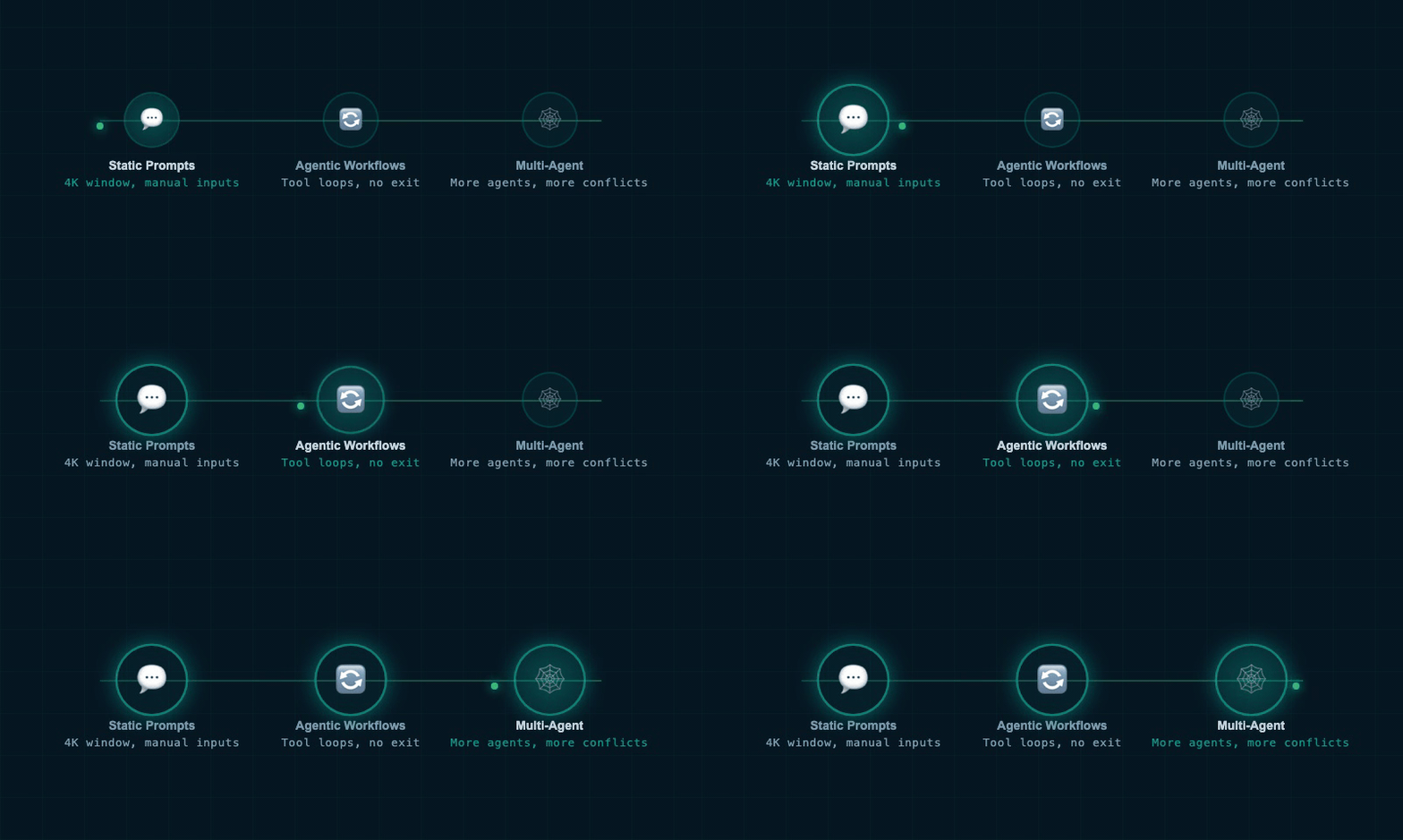
The three-stage progression of agentic AI — each step adds capability but also adds context complexity.
Early AI agents were simple. They had small working memories — room for roughly 4,000 words at a time. You chose carefully what to feed them. If you gave them bad inputs, you got bad outputs. Easy to debug.
Then those memories got bigger. Agents gained search tools. They could loop through documents and gather more information on their own. That sounded great. But there was no built-in stopping point.
The agent would keep gathering. More documents. More context. More data. It never said "that's enough." So it never stopped.
Then came multi-agent systems — multiple AI agents running in parallel, each with its own job. More horsepower, right? Wrong. More agents meant more conflicting answers. They started disagreeing with each other. The more complex the setup, the messier the results.
Everyone assumed the same thing: more context means smarter output. That assumption turns out to be wrong.
The U-Curve Problem
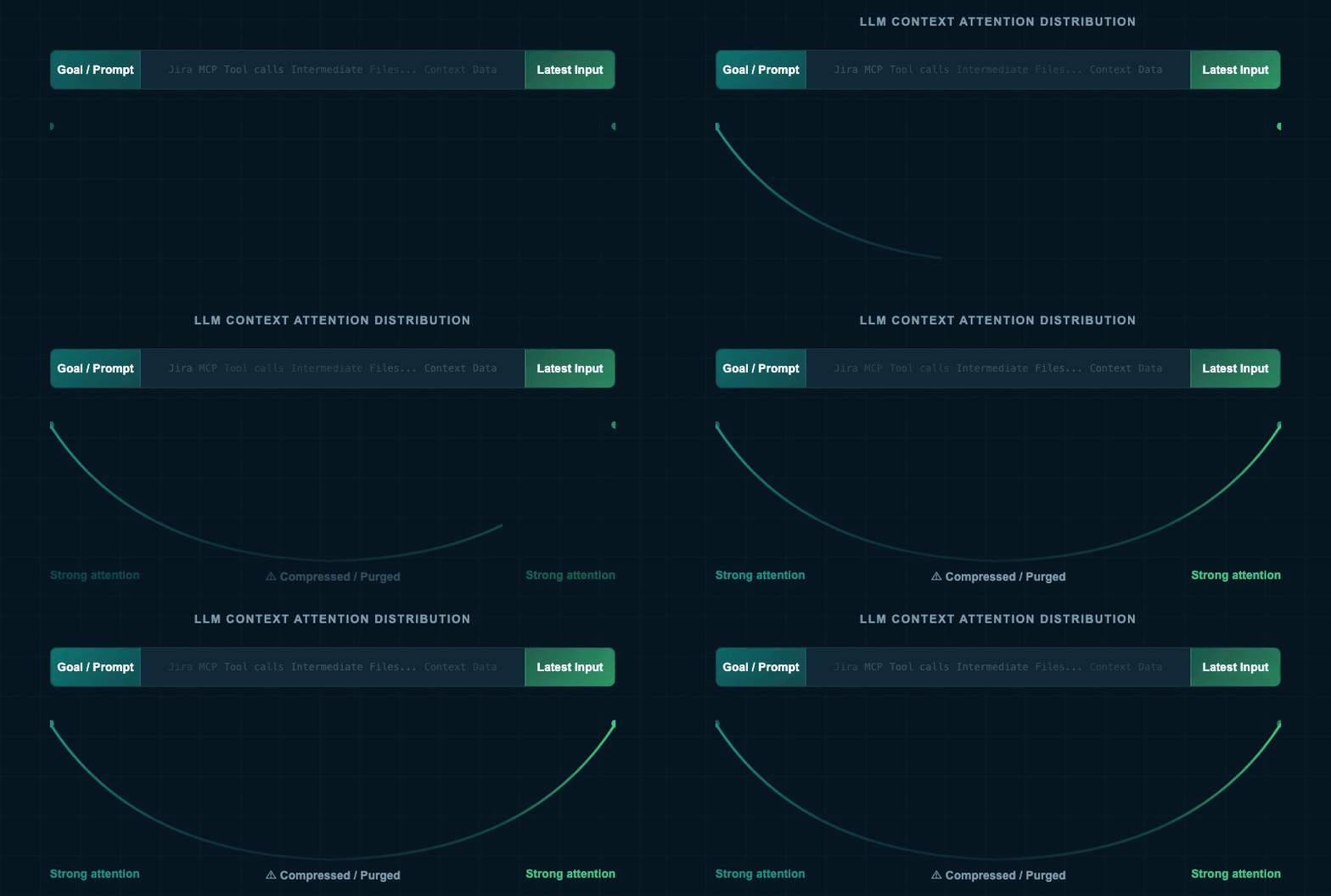
The U-curve attention problem: AI language models focus on the beginning (goal) and end (latest input), compressing or ignoring everything in between.
Here's what research on AI language models — the systems inside tools like ChatGPT — has actually found.
These models pay strong attention to the beginning of what you give them. They pay strong attention to the end. Everything in the middle? They compress it. Most of it effectively disappears.
Picture it as a U-shape:
- Beginning — your original question → the AI reads this carefully
- End — the most recent information → the AI reads this carefully too
- Middle — everything else you added → largely ignored
It's not a flaw. The AI is doing exactly what it's designed to do. It's connecting your question with the latest input as efficiently as it can. The material in between is collateral damage.
What this means: More information in the middle doesn't help. The AI can't read more carefully just because there's more there. Imagine asking an AI to review 50 files. You assume it reads all 50. What actually happens: it reads your instructions, scans a few early files, jumps to the last few — and skips most of what's in between.
5 Ways to Fix It
None of these is a perfect solution. All of them are better than dumping everything in and hoping for the best.
1. Context Engine
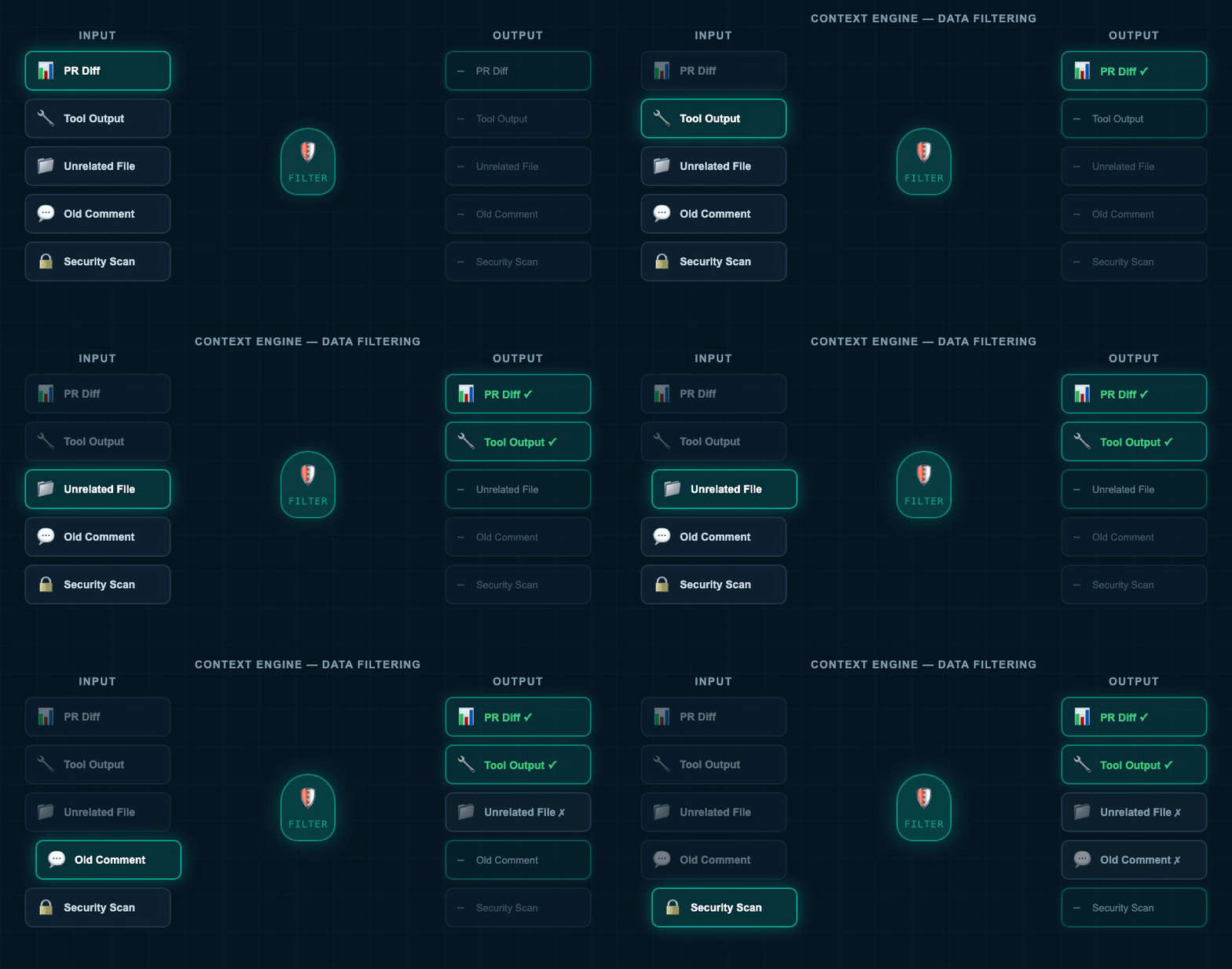
A context engine acts as a filter — relevant data gets through, irrelevant data gets turned away before it wastes tokens.
Think of a doorman at an exclusive club. He doesn't let everyone in. He checks if you're on the list.
A context engine works the same way. Before any information reaches the agent, the engine scores and ranks it. Only what's genuinely relevant gets through.
Ask the agent to review a code change, and instead of 500 files, it gets the 5 most relevant ones. That's a massive difference.
The downside is the list itself. Keeping the index accurate across many repositories takes constant upkeep. If that's not something your team can commit to, the maintenance quietly becomes a problem.
2. Hierarchical Summarisation
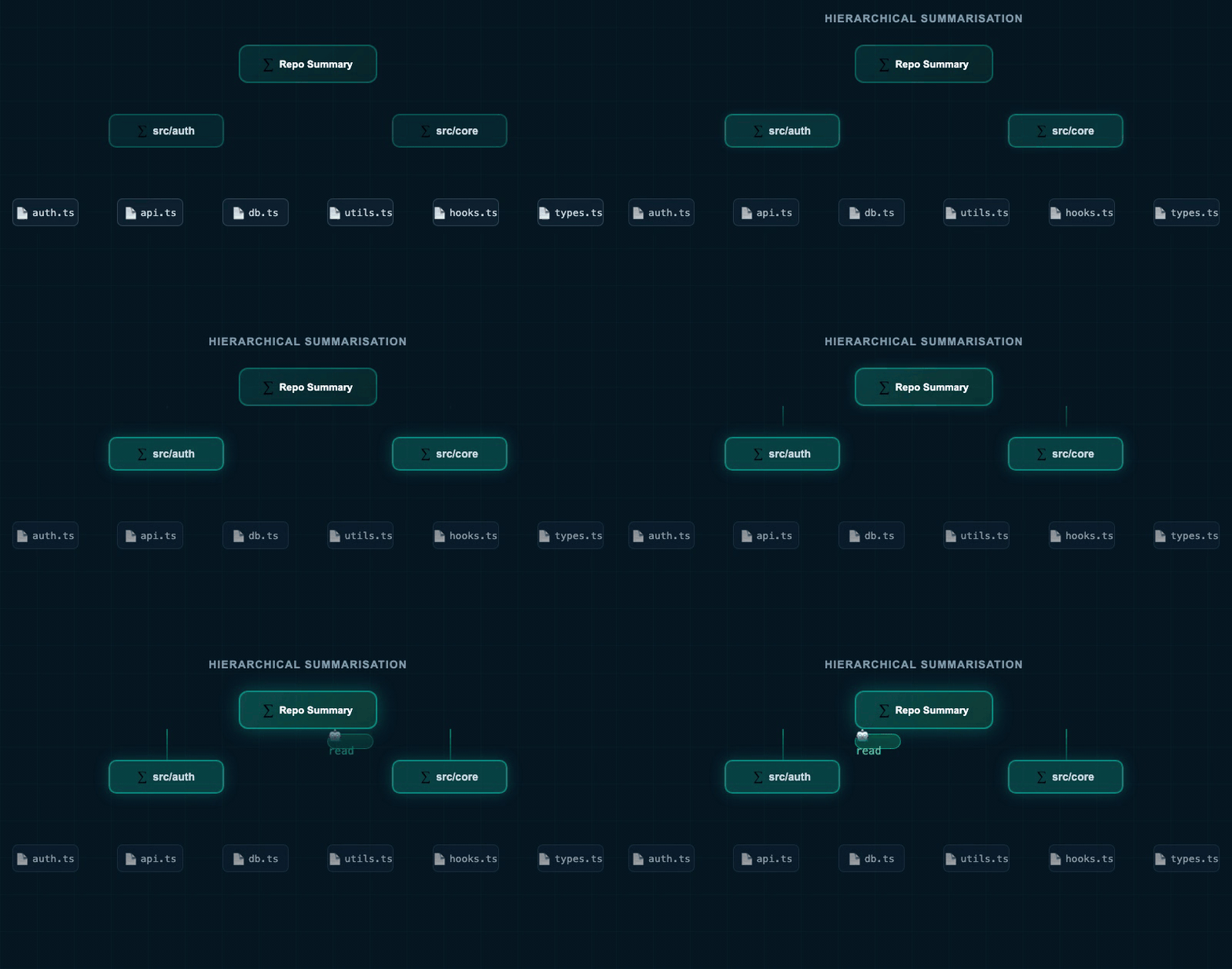
Files compress into folder summaries, then into a repo-level summary — an agent only reads the top, then zooms into exactly what it needs.
Imagine a library where every book has a two-sentence summary on the cover. You browse the summaries first. You only pull the full book if the summary matches what you need.
That's hierarchical summarisation. Each file gets a short summary. Each folder gets a summary of its files. The agent navigates the summaries — only reading full content when it finds a match.
Clean. Efficient. Much less noise.
The problem is freshness. Every time a file changes, its summary goes stale. Keeping summaries up to date means constant background processing. And a stale summary is quietly wrong — the agent uses it confidently, not knowing it's outdated.
Works well for stable projects. Struggles when the code changes daily.
3. Knowledge Graph
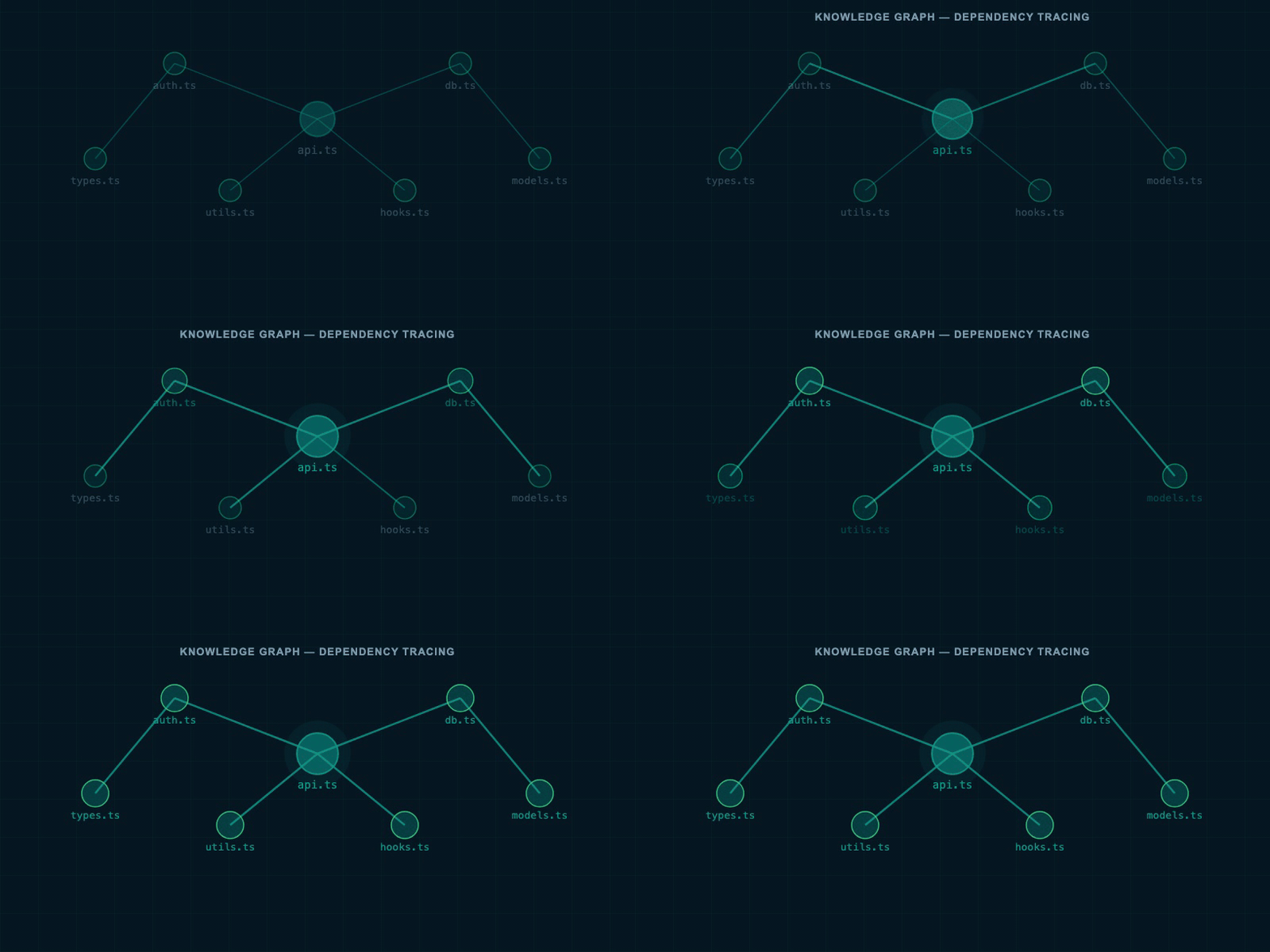
A knowledge graph traces dependency relationships — a ripple of relevance propagates from the root file outward through connected components.
Imagine you're debugging a problem in your app. You change one file — and three unrelated things break. Why? Because those three things depended on what you changed.
A knowledge graph maps those relationships explicitly. It stores the fact that File A affects File B, which affects File C. When the agent needs to understand a change, it follows the actual connections — instead of guessing.
This is powerful for large systems with deep, tangled dependencies.
The catch: building the map is a serious investment. For complex enterprise systems where the dependency chains really matter, it's worth it. For most teams, there's an easier place to start.
4. Iterative Retrieval
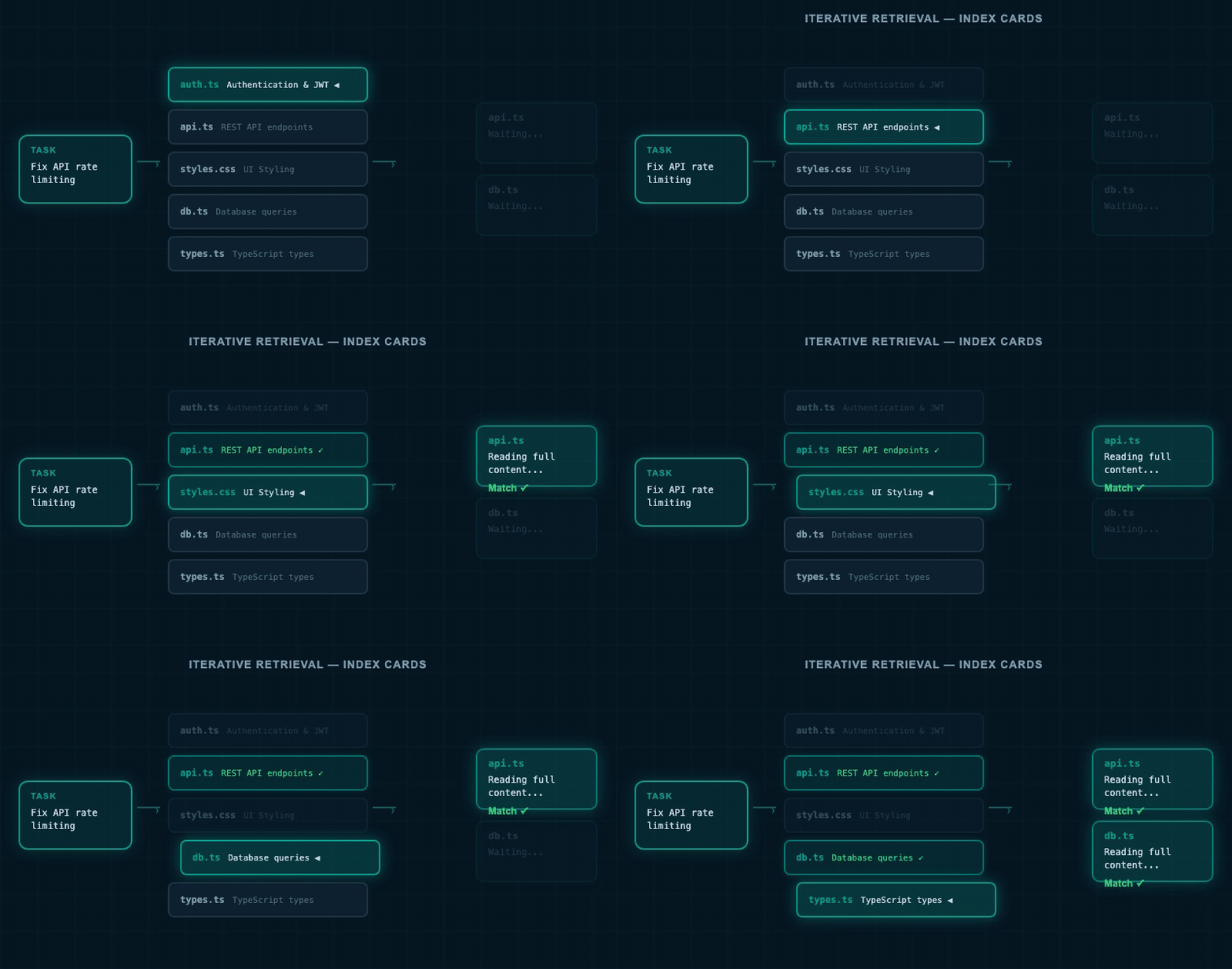
The library card approach: scan the index, identify two matching files, read only those in full — context efficiency without upfront infrastructure.
Before computers, libraries used physical card catalogs. Every book had a card: title, topic, one-line description. You scanned the cards to find what you needed. Then you went and got the actual book.
Iterative retrieval is the same idea. Each file in your project gets a card — just the topic and a brief description. The agent scans cards first. It only reads the full file if the card matches what it's looking for.
Less setup than a knowledge graph. More accurate than dumping everything in. For most teams building internal AI tools, this is the right place to start.
The key insight: index first, read second. It's how good researchers work — and it's how good AI agents should work too.
5. Self-Correction (Critic Node)
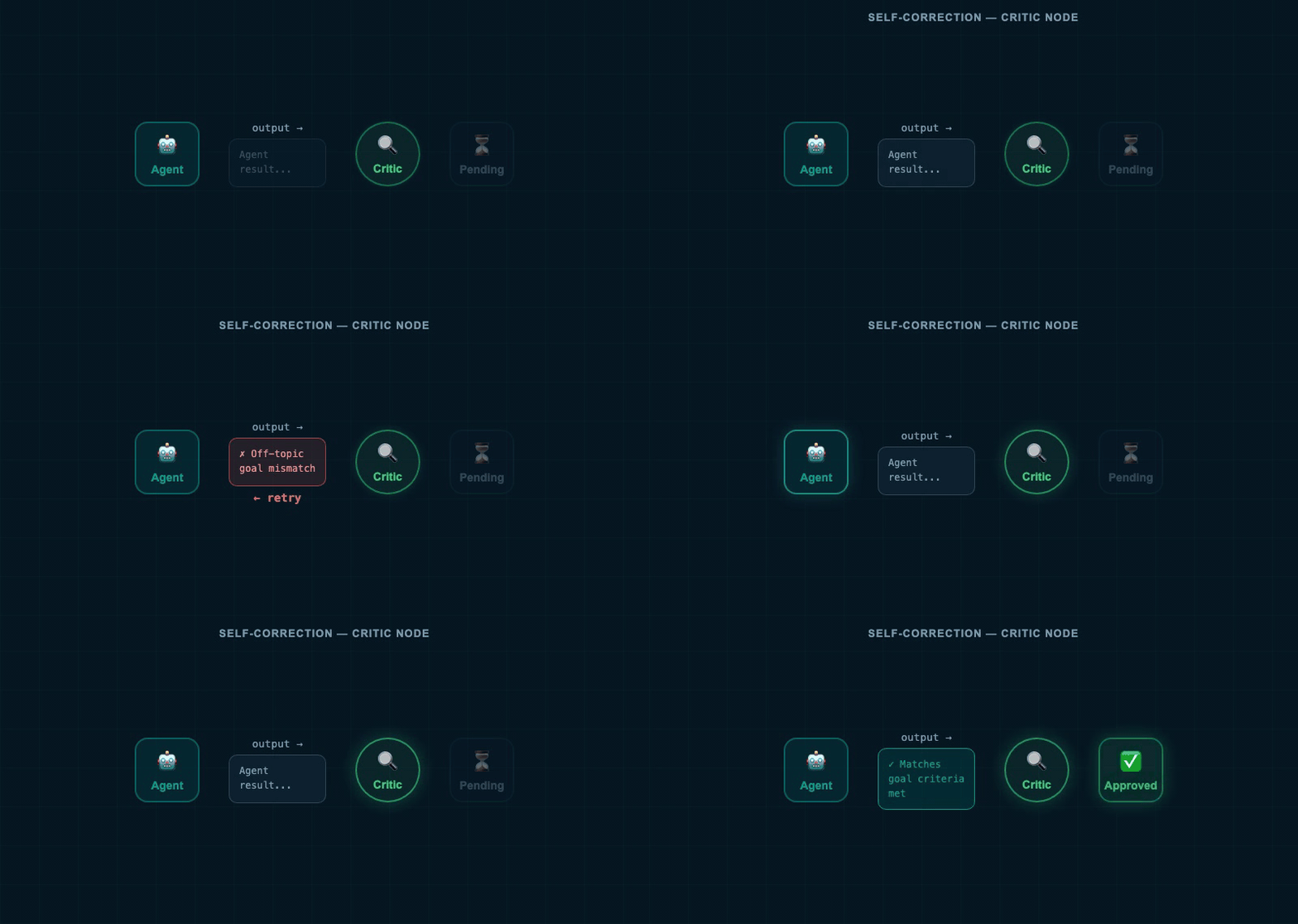
The critic node catches mismatches between agent output and original goal, fires a retry signal, and approves only when they align.
Sometimes the agent loses track of what you asked for. It starts with your question. Processes file after file. By the end, the U-curve has compressed your original instructions. The answer it produces is technically correct — but it's answering the wrong question.
A critic node fixes this. After the agent finishes, a second step checks: does this output actually match what we originally asked for?
If not, the agent tries again. With the original goal in focus.
No special index required. No upfront setup. Just one extra step that catches a lot of problems. The cost is time — each retry adds a delay. For automated background tasks, it's usually worth it.
The Overthinking Problem
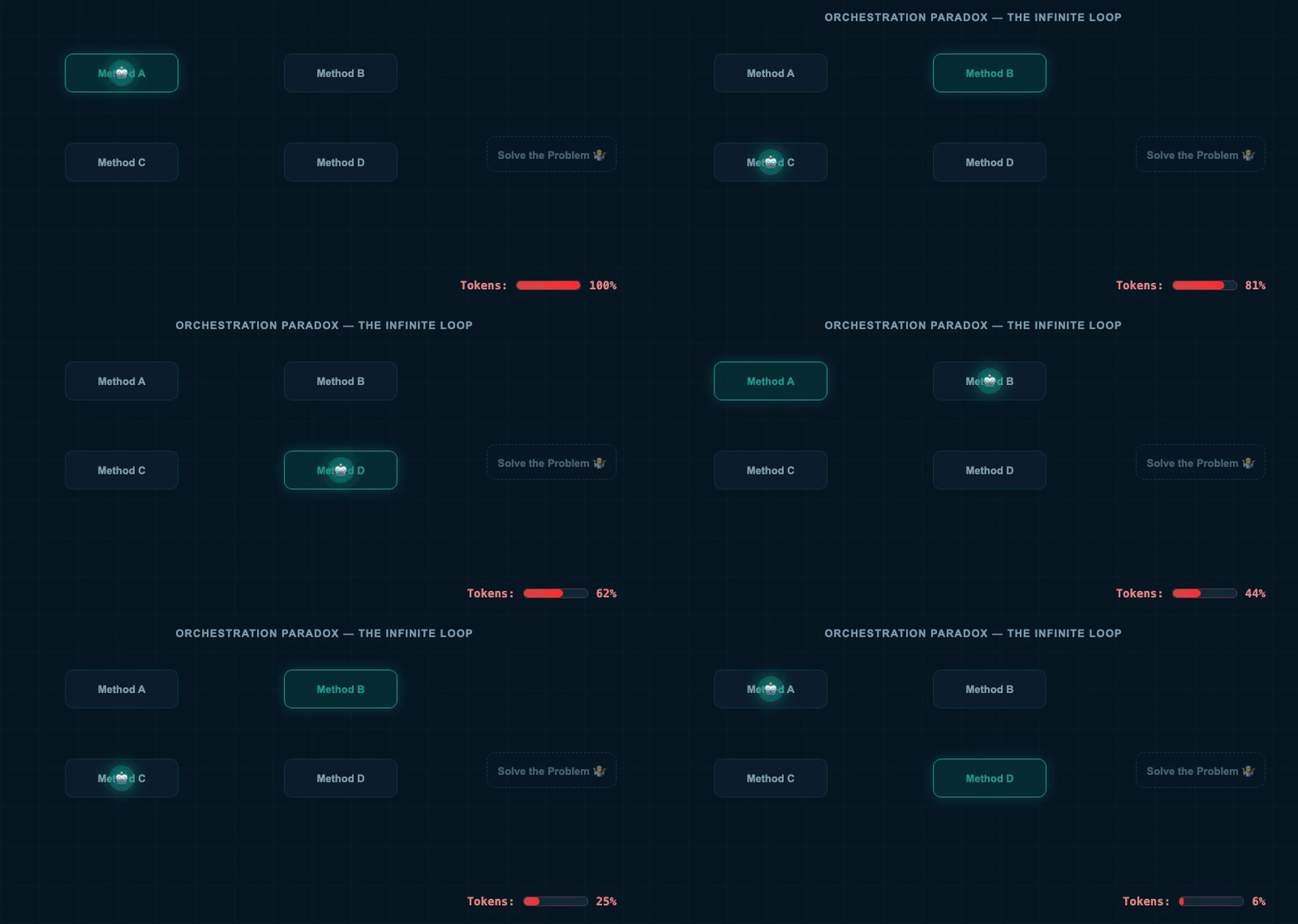
The orchestration paradox: a capable agent explores endlessly, token counter draining, while the actual problem sits untouched in the corner.
There's another failure mode nobody talks about enough.
Give a very powerful AI model a complex task. Instead of doing it, the model starts thinking about how to do it. It considers one approach. Then a second. Then it revisits the first. Your entire processing budget evaporates on planning.
Nothing gets done.
The smarter the model, the worse this gets. High intelligence is great for exploration. It's terrible when you just need execution.
The model isn't broken. It's doing exactly what it's designed to do — exploring thoroughly before committing. The problem is your task needed action, not analysis.
The 80/20 Split: The Most Practical Fix
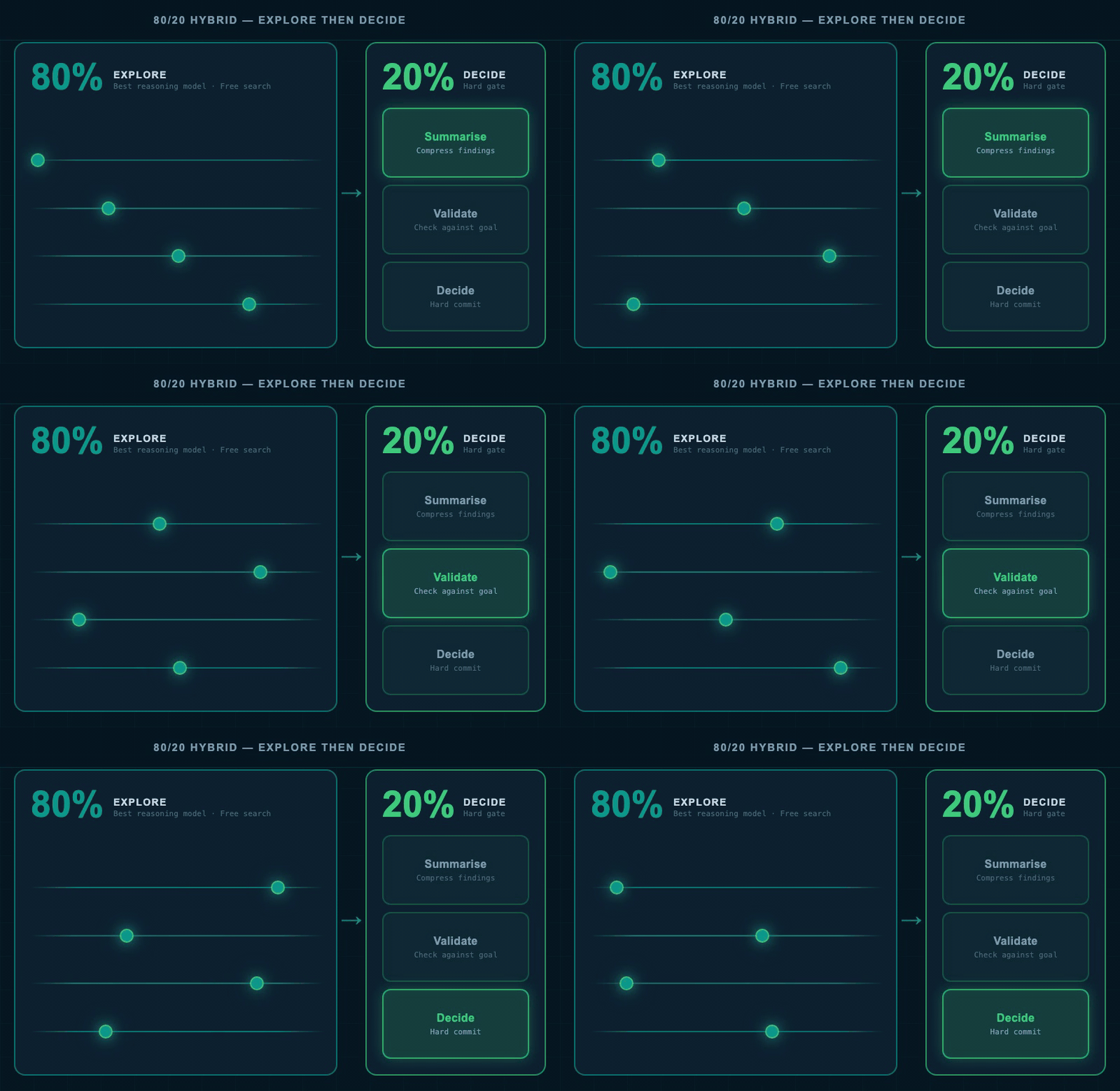
80% free exploration by the best reasoning model, 20% hard-gated structured decision — the exploration result narrows through the deterministic filter.
Here's the fix — and it solves the cost problem too.
Don't use one model for everything. Split the work.
Use a powerful model for the parts that need deep thinking. Use a smaller, faster model for the parts that just need a clear decision.
The powerful model handles: searching and exploring the problem, finding relevant files and information, generating multiple possible answers.
The smaller model handles: turning the research into a final answer, checking whether outputs match the original goal, choosing the next step from a defined list.
The second type sounds complex. But it's actually just pattern-matching against a fixed set of options. A smaller model does it just as well — and much faster.
To stop the powerful model from exploring forever:
- Step limit — after 4 or 5 actions, stop and work with what you have
- Time limit — after a few minutes, stop and submit the best result so far
Neither is elegant. Both make your costs predictable.
Specialist Agents + A Judge
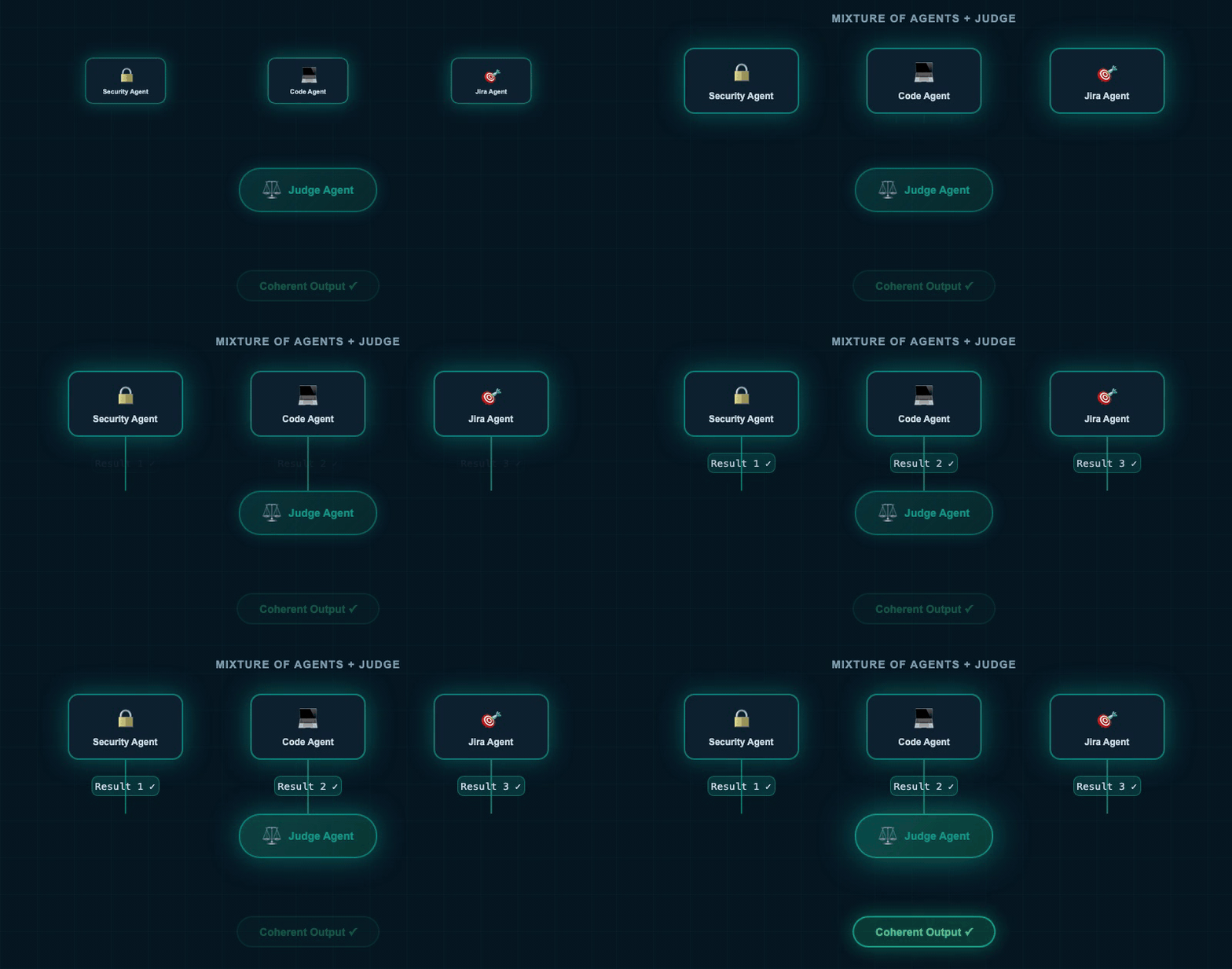
Three specialists work in parallel — Security, Code Quality, and Ticket Context agents — then a judge agent synthesises all three results into one coherent output.
A general-purpose agent asked to do everything will always be beaten by specialists.
Think about a hospital. A general practitioner is useful. But if you need heart surgery, you want a cardiac surgeon — not someone who also handles broken arms and skin conditions. Specialists go deeper because they know more and carry less.
The same logic applies to AI agents. A security agent. A code quality agent. A ticket context agent. Each one sees only what's relevant to its job. Each produces focused, expert output.
But three specialists produce three separate answers. Those answers might conflict. One flags a security problem. Another approves the same code. Without anyone to reconcile them, you get noise.
That's the judge agent's job. One agent, one task: look at all the specialist results and ask — do these make sense together, given what we were originally trying to do?
One design rule: keep the judge in the smaller, structured model category. Its job is to compare and decide — not to explore freely.
How It Works in Practice
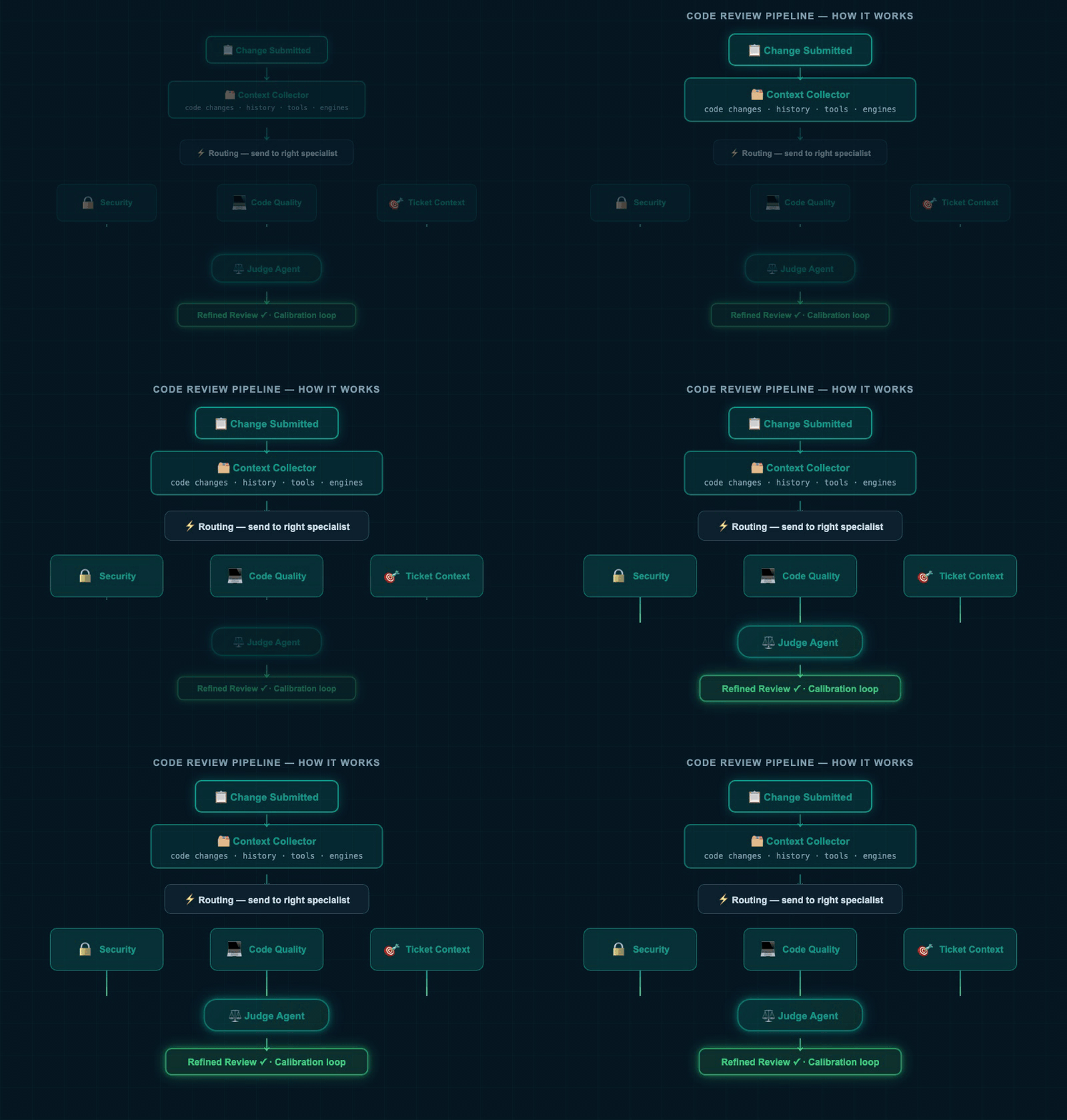
A real-world code review pipeline: change submitted → context collected → routed → specialist agents in parallel → judge → refined review with calibration loop.
Put it all together and you get a pipeline that actually works. Here's how these ideas combine in a real automated code review system:
- Collect first — gather the code changes, the history, tool outputs. Don't start reviewing yet. Just collect.
- Route it — send each piece of information to the specialist that needs it. Nothing gets dumped on everyone.
- Specialists work in parallel — security agent, code quality agent, ticket context agent. Focused, no overlap.
- The judge decides — all results come to the judge. It checks coherence, filters noise, and asks: of everything we found, what's actually worth surfacing right now?
- It gets smarter — suggestions the team accepts gain weight. Rejected ones lose weight. Every review makes the next one a little better.
Over time, the system adapts to how your team specifically works. Not the industry in general — your team.
FAQs
Summary
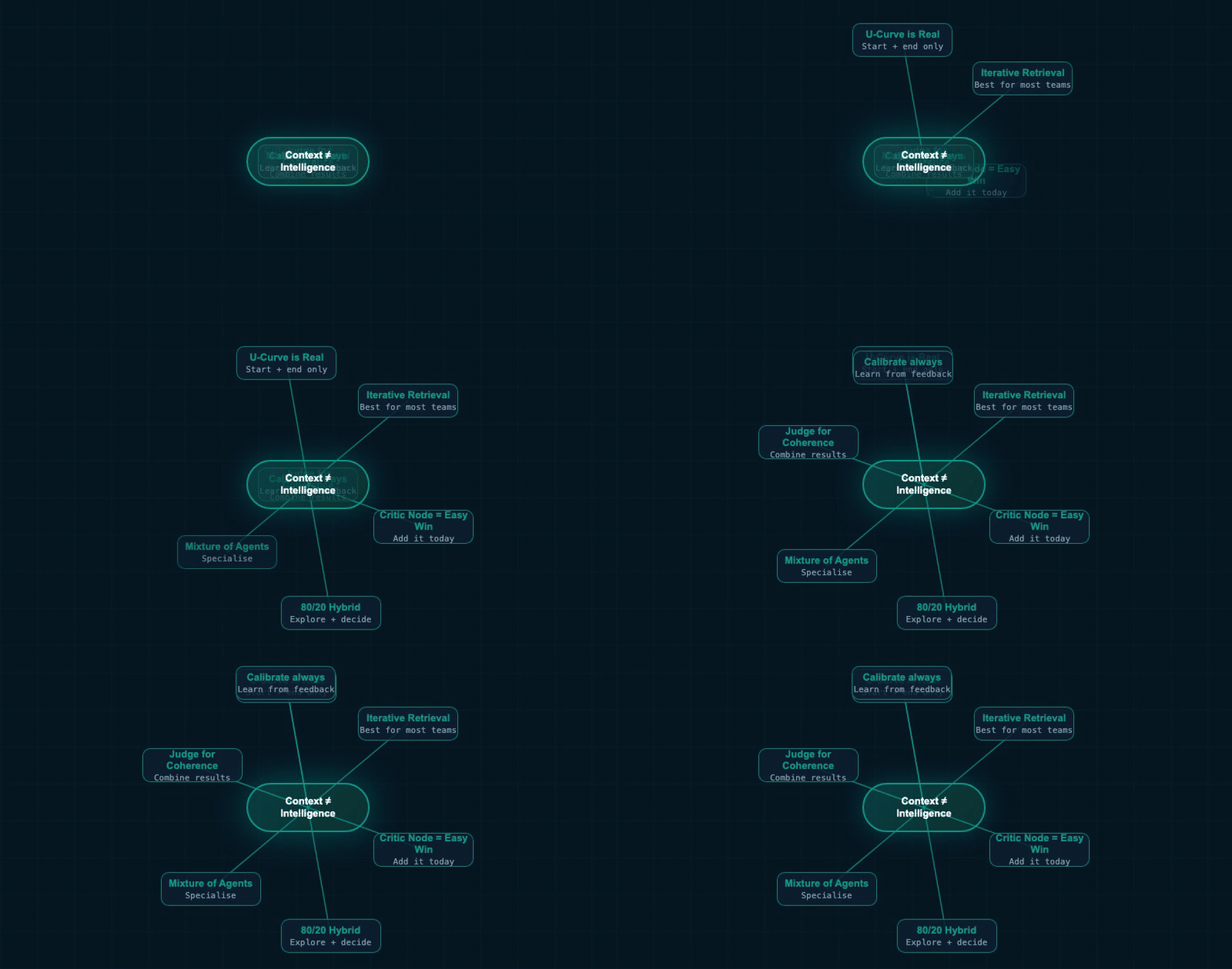
Everything in one map: seven takeaways branching from the core insight.
It's the one that knows what to ignore.
- Giving an AI agent more information doesn't always help — models tend to ignore what's in the middle of their context and only focus on the beginning and the end.
- Don't dump your entire software project into an agent. Be selective about what you give it.
- The easiest improvement you can make today: add a step that checks whether the agent's answer actually matches what you originally asked for.
- If your AI agent keeps exploring options instead of taking action, the fix is simple: put a hard cap on how many steps it can take.
- For complex tasks, split the work: let a powerful model explore and research, then use a simpler model to make the final structured decision.
- Multiple specialist agents that each do one thing well will consistently outperform one general agent asked to do everything.
- A judge agent keeps specialist results coherent — it checks that all the answers actually make sense together before surfacing them to you.